
Foundation repair is a significant structural undertaking that often leaves homeowners feeling anxious about the disruption to their daily lives. Understanding the typical timeline helps set realistic expectations and allows for better planning around work, family, and home access.
While every home presents a unique set of geological and structural challenges, most standard repairs follow a predictable sequence of events. Knowing how long each phase takes ensures you aren’t caught off guard by a project that seems to stretch on longer than anticipated.
Initial Assessment and Permitting Phase
The process begins long before a shovel hits the dirt, starting with a comprehensive structural evaluation and the acquisition of necessary legal documents. This administrative stage is critical for ensuring the repair plan is engineered correctly and complies with local building codes.
- Inspection and Engineering (1–3 Days): A specialist assesses the damage, and an engineer often creates a stamped repair plan.
- City Permitting (1–4 Weeks): Depending on your local municipality, waiting for permit approval is often the longest part of the pre-construction phase.
Once the “green light” is given by the city, the physical labor can be scheduled, but remember that weather and contractor backlogs can influence the actual start date.
Site Preparation and Excavation
Before the foundation can be lifted or stabilized, the area around the home must be prepared to allow for heavy equipment and crew access. This phase involves moving earth and potentially clearing obstacles that could hinder the structural work.
- Utility Locates (48 Hours): Local utility companies must mark underground lines to prevent dangerous pipe or wire strikes.
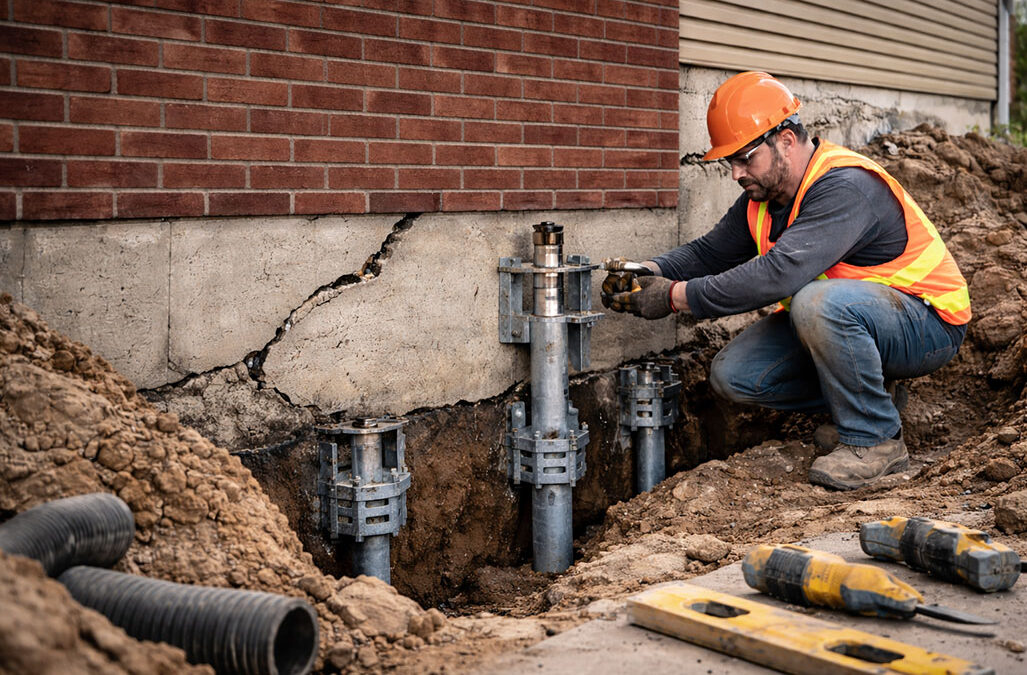
- Hand or Machine Digging (1–2 Days): Crews excavate “access holes” at specific intervals around the perimeter where piers will be installed.
Effective site prep ensures the actual repair phase moves quickly and safely without damaging your home’s plumbing or electrical systems.
Pier Installation and Structural Lifting
This is the “heavy lifting” portion of the project where the actual stabilization occurs. Using hydraulic equipment, the crew will drive piers deep into the earth until they hit load-bearing strata or bedrock.
- Driving the Piers (1–3 Days): The time depends on the number of piers; a typical home may require 10 to 20 piers for a partial stabilization.
- The “Lift” (2–4 Hours): The actual process of leveling the home happens quickly but requires extreme precision to avoid sudden drywall or tile damage.
This is often the most intense phase of the project, characterized by mechanical noise and the use of heavy hydraulic jacks.
Plumbing Tests and Void Filling
Lifting a home can shift the soil and the pipes beneath the slab, making a post-repair plumbing test an absolute necessity. If a significant gap was created between the slab and the soil during the lift, “mud-jacking” or foam injection may be used to fill the void.
- Hydrostatic Pressure Test (3–5 Hours): A plumber checks the sewer and water lines to ensure no leaks were created during the movement.
- Slab Shielding or Grouting (1 Day): Injecting material under the slab provides extra support and prevents future soil erosion.
Ensuring the utilities are intact and the ground is solid prevents secondary issues like water leaks from undermining your newly stabilized foundation.
Final Backfill and Property Cleanup
The final stage involves returning the property to its original state, which is vital for both curb appeal and proper drainage. The crew will fill the access holes, compact the soil, and remove any construction debris from the site.
- Backfilling and Compaction (1 Day): Soil is replaced and tamped down to prevent settling around the new piers.
- Site Restoration (4–6 Hours): This includes cleaning off walkways and, in some cases, replacing bushes or landscaping that had to be moved.
A thorough cleanup marks the official end of the project, leaving you with a stable home and a clear yard.
Mastering the Timeline for a Stable Home
A typical residential foundation repair usually takes between 3 to 7 days of active on-site work, though the total window from the first phone call to the final sign-off can span several weeks. Factors like the depth of stable soil, the size of the home, and the specific repair method chosen will ultimately dictate the speed of completion.
By understanding these stages, you can navigate the repair process with confidence and minimal stress. Investing a few days into professional structural restoration ensures your home remains safe, level, and valuable for decades to come.