
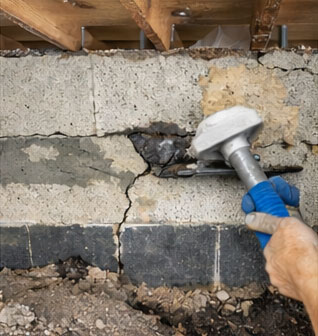
While most homeowners wait for a massive fissure to appear in a basement wall before worrying, the most dangerous structural issues often start with much subtler clues. Ignoring these early warnings can lead to catastrophic repair bills and a significant decrease in your property’s market value.
Understanding the non-visual signs of foundation movement allows you to catch shifting soil and moisture issues before they compromise the entire frame of your home. By staying vigilant, you can transform a potential structural disaster into a manageable maintenance task.
Windows and Doors That Suddenly Stick
If you find yourself putting your shoulder into a door just to get it to latch, or if a window that used to slide easily is now jammed, your foundation is likely shifting. This happens because, as the foundation settles unevenly, the rectangular frames of your openings rack into parallelograms, throwing the hardware out of alignment.
- Check if doors swing open or closed on their own, which indicates the wall is no longer plumb.
- Look for “rub marks” on the top or side of door frames where the wood is making fresh contact.
- Test windows to see if the locks no longer line up perfectly with the strike plate.
It is not just about the frustration of a sticky door; it is about the structural stress being placed on your home’s skeletal system. Even a fraction of an inch of movement at the base can translate into significant displacement at the top of a door frame.
Bouncy or Sloping Floors
When a foundation settles, or the internal support piers in a crawl space fail, the floor joists lose their level base, leading to a “trampoline” effect when you walk across a room. You might also notice a slight tilt in the floor, which is often first discovered when a round object rolls across a hard surface without being touched.
- Place a ball or a level on the floor in multiple rooms to check for consistent sloping toward one side of the house.
- Feel for “soft spots” or extra vibration in the floor when walking, especially near the center of the room.
- Observe if the baseboards have pulled away from the floorboards, creating a visible gap.
This sloping isn’t just an aesthetic quirk of an older home; it indicates that the load-bearing points are no longer distributing weight correctly. Over time, this uneven pressure can lead to joist failure and permanent damage to your subflooring.
Gaps Around Exterior Window Frames and Doors
Sometimes the sign of a failing foundation is not a crack in the brick, but a literal separation where the window or door unit meets the exterior wall. As the house tilts, the rigid window frame stays square while the wall around it pulls away, leaving a space that invites moisture and pests.
- Check for “daylight” visible from the inside around the edges of exterior door frames or window casings.
- Look for exterior caulking that has pulled away or cracked significantly, exposing the raw frame.
- Inspect the “frieze board” (the trim at the top of your siding) for gaps where it meets the soffit or roofline.
These gaps are often the first structural indicators that the perimeter of your home is sinking or heaving. Left unaddressed, these openings allow water to infiltrate the wall cavity, leading to secondary issues like wood rot and mold.
Nail Pops in Your Drywall
A nail pop occurs when the structural stud behind the wall shifts, causing the drywall nail or screw to push through the finished surface and create a small, circular bump. While one or two might be due to minor settling, a cluster of them usually points to significant foundation movement.
- Scan the upper corners of your rooms and the ceiling for small, recurring bumps in the drywall finish.
- Watch for vertical lines of nail pops, which suggest a specific stud is under intense mechanical pressure.
- Pay attention if these pops appear shortly after a period of heavy rain or extreme drought, as soil volume changes drive foundation movement.
Drywall is brittle and unforgiving; it will almost always be the first material to telegraph that the wood framing beneath it is being twisted. These small bumps are the physical manifestation of the house “pulling” against its own fasteners.
The Mystery of Creaking and Popping Sounds
Houses naturally settle and make noise, but consistent, loud popping or “gunshot” sounds during temperature changes can indicate that the foundation is under extreme tension. These sounds are often the result of the wooden frame of the house being forced to adjust to a base that is no longer level.
- Listen for loud groans or pops that occur specifically at night when the house cools and the materials contract.
- Note if the creaking is localized to one specific corner of the home that also shows signs of sticking doors.
- Monitor if the frequency of these noises increases significantly following a change in the local water table or a major storm.
While often dismissed as “ghosts” or wind, these acoustic warnings are frequently the sound of your home’s structural members struggling to stay connected. When the foundation moves, the entire house groans under the weight of the realignment.
Protecting Your Greatest Asset Through Proactive Vigilance
Recognizing these sneaky signs of foundation failure is the most effective way to protect your home’s longevity and your family’s safety. A stable foundation is the core requirement for every other part of your home to function properly, from the roof to the plumbing.
By addressing these subtle shifts early, you ensure that your property remains a secure and valuable investment for decades to come. Do not wait for a visible crack to tell you what your sticky doors and bouncy floors are already shouting.